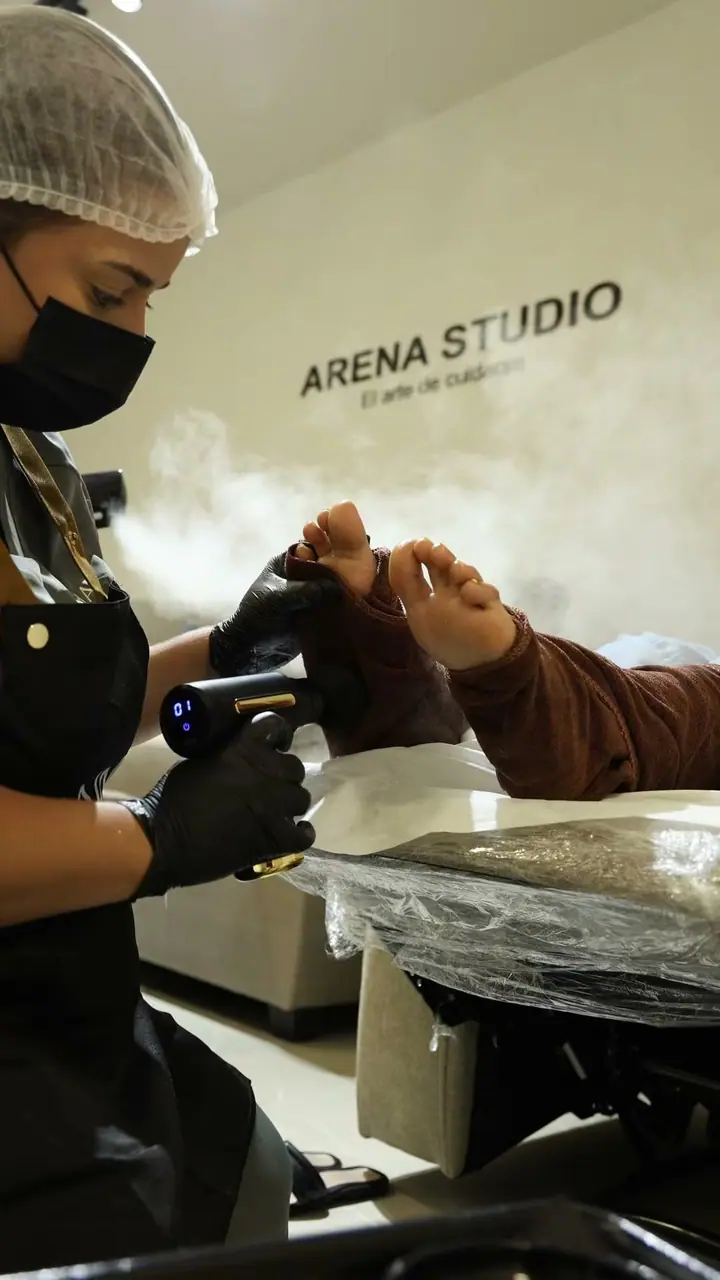
What Is a Dry Pedicure? A Waterless Pedicure Guide
Soft cuticles, smooth heels and a polish that actually lasts, all without soaking your feet. Here’s how a waterless pedicure works and who it’s for.
Rubber, builder, polygel, dip powder and soft gel
Rubber base, builder gel, polygel, soft gel, dip powder: the menu can be confusing. Here’s what each one actually does and how to pick the right one for your nails and your routine.

Because nails and lifestyles vary a lot. Some people just want their natural nails to stop breaking. Others want length they don’t have, or something tough enough to survive a hands-on job. Each system solves a different problem, and knowing the basics makes it easier to ask for what you actually need.
A flexible, rubbery base coat applied over your natural nail. It levels out ridges and uneven spots and strengthens the nail without making it rigid, so it bends with your nail instead of fighting it. It’s cured under a lamp, and gel color can go on top. Great if your nails are thin, bendy or peeling and you want them smooth without much added length.
Builder gel is thicker than rubber base. It’s used to build structure: create an arch that spreads stress more evenly, reinforce the spot where your nail always breaks, or extend it a little. Also lamp-cured. Choose it when you need more strength than rubber can give or want to correct your nail’s shape.
Pre-shaped tips made of soft gel that cover the entire nail. They’re bonded with gel and cured under a lamp. Because the shape is already built in, results are consistent and application is usually quick. It’s a lightweight extension system for anyone who wants length and a defined shape from day one.
Polygel is a hybrid of acrylic and gel. It comes as a moldable paste that’s shaped with a brush and cured under a lamp. Since it doesn’t self-level, there’s time to sculpt carefully, and it typically has less odor than traditional acrylic. Strong and light, it’s a solid choice for extensions that need to last.
Dip powder bonds to the nail using a base and an activator, with no lamp required. It creates a durable, color-rich layer. It works well if you’d rather skip UV or LED curing, or want a firm finish over your natural nails.
Start with rubber base. It gives your nail the support it needs to grow out without snapping, and the finish looks natural.
Builder gel puts structure exactly where it’s needed. It’s also a good middle ground if you want a bit of length without going to full extensions.
Go for soft gel if you want speed and a consistent shape; polygel if you’d like a custom-sculpted, very durable extension.
Typing all day, cooking, lifting at the gym or frequent hand washing all put nails to the test. Builder gel or polygel usually hold up best. Keeping them on the shorter side helps too.
Dip powder is the option that doesn’t need light curing.
Still not sure? That’s completely normal. At your appointment we’ll look at your nails and recommend what suits them. You can browse the options on our rubber, builder gel and polygel page.
As a general guide, every 2 to 4 weeks. Your nail keeps growing, and over time the product moves toward the tip. That throws off the nail’s balance and raises the risk of lifting or breaking.
A fill covers the regrowth area, rebalances the structure and gives you the chance to switch colors. Signs it’s time:
If an edge lifts, don’t glue it down at home or pull it off. Moisture can get trapped underneath. Book a repair instead.
A lot of nail damage comes from removal, not from the product itself. Peeling or prying it off strips layers of your natural nail and leaves it thin and sensitive. Depending on the product, professional removal uses filing, soaking or a mix of both, always taking care not to over-file.
If you notice discoloration, pain, swelling or signs of fungus, don’t apply any system on top. See a healthcare professional first.
At Arena Studio on Av. los Fundadores in San Francisco, we offer rubber base, builder gel, soft gel, polygel and dip powder, plus nail art, repairs and removals. We take our time and keep things personal, so you leave with nails that fit your life in Panama City, humidity included. See our full manicure and pedicure menu, and if you’re a guy looking for clean, tidy hands, check out our men’s manicure.
Message us on WhatsApp through our contact page to check availability.
FAQ
When applied and removed properly, damage usually comes from peeling the product off or over-filing, which is why we recommend professional removal. As with any gel, some people develop an allergy to its ingredients: if you notice itching, redness or the nail lifting, have it removed and see a dermatologist.
Yes. The polygel is removed carefully and, if your natural nail is in good shape, rubber base is applied to strengthen it while it grows.
The product shifts toward the tip and the risk of lifting or breaking your natural nail goes up. It’s best to fill or remove before that point.
For pricing and availability, ask us on WhatsApp. We’ll help you choose the right system for your nails and what you’re after.
Soft cuticles, smooth heels and a polish that actually lasts, all without soaking your feet. Here’s how a waterless pedicure works and who it’s for.

There’s no one-size-fits-all answer. It depends on your skin, your routine and, here in Panama City, a lot on the weather. Here’s how to find your rhythm.

Two low-maintenance treatments that tidy and lift what you already have, with no pigment tattooed into the skin and no glued-on fibers. Here is how they work and how to care for them.