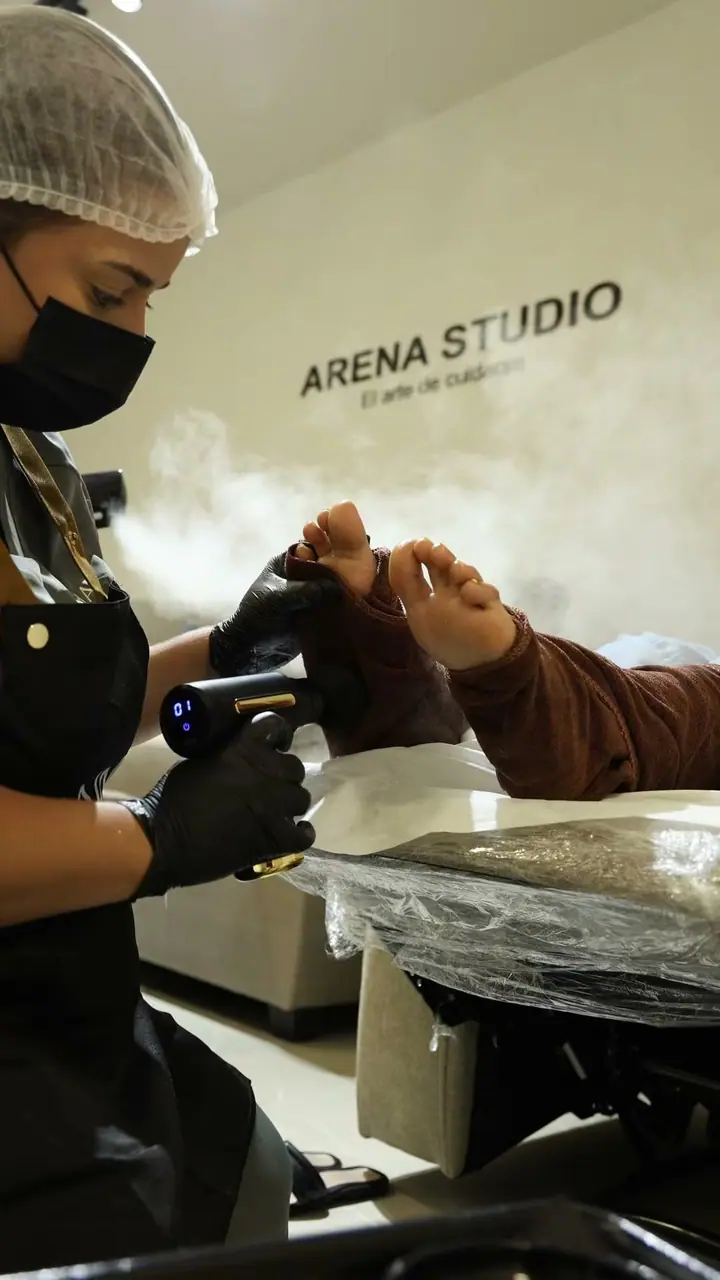
What Is a Dry Pedicure? A Waterless Pedicure Guide
Soft cuticles, smooth heels and a polish that actually lasts, all without soaking your feet. Here’s how a waterless pedicure works and who it’s for.
Classes for adults over 55
Staying active after 55 is about keeping your independence and feeling confident in everyday life. Here is what to focus on, how much the WHO recommends, and how to get started if you have been inactive for a while.

Our bodies change over time. Getting up from a low chair, carrying groceries up the stairs or bending down to pick something up can start to feel harder. The good news is that your body keeps responding to movement at any age, and training these three abilities makes a real difference in daily life.
The three work together. A routine that focuses on only one falls short; one that combines them prepares you for real life.
The World Health Organization (WHO) has specific guidelines for adults aged 65 and older. According to the WHO, each week you should aim for:
If you're nowhere near those numbers today, that's fine. They're a goal, not a starting line. The WHO itself stresses that some activity is better than none and that it's best to build up gradually.
Coming back to exercise after months or years off is easier when you take it step by step:
Every body moves at its own pace, but with consistency many people start noticing changes in everyday life:
There's no need to compare yourself to anyone else. Your benchmark is you, a month ago. Small, steady progress is exactly what you're after.
A class designed for adults over 55 isn't a slowed-down version of a regular workout. It's built from the ground up around what matters most at this stage of life, with exercises that adapt to each person.
Because the group is small, the instructor can watch how you move, correct your form and offer easier or more challenging variations depending on how you feel that day. The only pace you need to keep is your own.
One of the most underrated benefits of group classes is the people. Seeing familiar faces every week, chatting before class and cheering on each other's progress turns exercise into something you look forward to.
For many expats and retirees who've settled in Panama, a regular class is also one of the easiest ways to build a local routine and meet people outside your usual circle.
Alongside strength, mobility and balance classes, you can add other gentle forms of movement. Yoga and Pilates classes work on breathing, body control and flexibility. And after an active week, a muscle recovery or tired-legs massage can be a welcome way to unwind. If you have a circulatory condition or an injury, check with your doctor first.
Arena Move, in San Francisco, Panama City, offers fitness classes for adults over 55 focused on strength, mobility and balance. Close guidance and a warm space where you can move at your own pace. Movement with intention.
For schedules, pricing or to book your first class, just message us on WhatsApp. We'd love to meet you.
FAQ
No. Classes adapt to your level, even if you have not exercised in a long time. We only ask that you check with your doctor if you have a health condition.
Comfortable clothes you can move in, athletic shoes and a water bottle. If your doctor has recommended glasses or any support device, bring that too.
Many people with these conditions benefit from adapted exercise, but every case is different. Get your doctor's approval first and tell us about your situation so exercises can be adjusted.
They are designed for that age group, with a pace and exercises suited to this stage of life. If you are not sure whether the class is right for you, message us on WhatsApp.
Soft cuticles, smooth heels and a polish that actually lasts, all without soaking your feet. Here’s how a waterless pedicure works and who it’s for.

There’s no one-size-fits-all answer. It depends on your skin, your routine and, here in Panama City, a lot on the weather. Here’s how to find your rhythm.

Rubber base, builder gel, polygel, soft gel, dip powder: the menu can be confusing. Here’s what each one actually does and how to pick the right one for your nails and your routine.